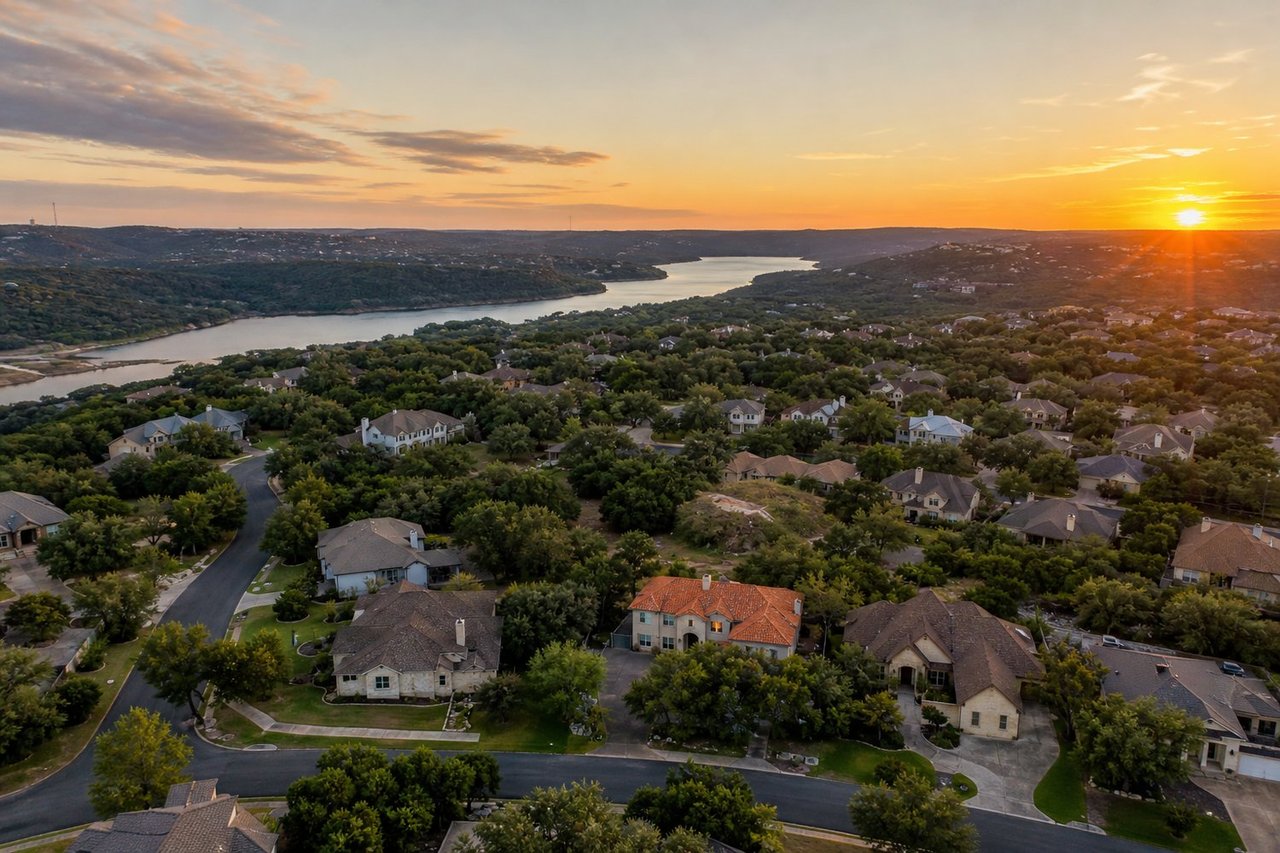
Austin is still a strong place to move for in-demand skills, especially software, where the metro has more than twice the national concentration of developers. Overall job growth went flat in mid-2026, though, so confirm real openings in your field, then choose where to live by commute.
By Jeff Joseph, REALTOR® | ERA Experts · Updated November 19, 2026
Is Austin a Good Place to Move for Work in 2026?
Yes for many professionals, with one caution: confirm openings in your own field first. Austin passed one million residents in 2025 and has a deep software and professional-services economy, but overall job growth has been flat since June 2026, so the job market rewards specific skills more than it rewards simply showing up. Once the job is settled, choose where to live by commute, then shop for the house.
Key Takeaways
- Austin's 2025 population was 1,002,632, and computer and mathematical occupations made up 6.5% of local employment in May 2025 versus 3.4% nationally.
- The Austin-area unemployment rate was 3.6% in September 2026, yet annualized job growth from June through September 2026 was -0.3%.
- Single-family homes sold in Crystal Falls from August through October 2026 had a median sale price of $737,251, down 4.9% from $775,000 in the same window a year earlier.
- In that same Crystal Falls window, homes sold at 97.0% of list price on average, and 46% of listings had a price cut.
- Austin, Travis County, Round Rock, Cedar Park, Pflugerville, Georgetown, and Buda are separate jurisdictions, so taxes, commutes, and services change when you cross a line.
What Does the Austin Job Market Look Like Right Now?
For many careers, yes, and especially for software and other computer occupations. The metro as a whole is not hiring across the board right now, so check openings in your specific field before you list a home somewhere else.
Here's what the public data shows:
- Austin became one of the U.S. cities with at least one million residents between 2024 and 2025, according to the U.S. Census Bureau. The City of Austin reports a 2025 population of 1,002,632.
- In May 2025, the Austin area had 83,500 computer and mathematical jobs, or 6.5% of local employment, compared with 3.4% nationally, per the Bureau of Labor Statistics.
- The same BLS release puts software developers' location quotient at 2.28, meaning Austin has 2.28 times the national concentration. Software quality-assurance analysts and testers came in at 2.15.
- The Dallas Federal Reserve reported a 3.6% unemployment rate for September 2026, with average hourly earnings of $37.92, up 4.8% year over year (a smoothed three-month average).
Now the other side. From June through September 2026, the Dallas Fed's Austin dashboard shows annualized job growth of -0.3%. Manufacturing payrolls rose 5.6%, information employment rose 3.6%, and leisure and hospitality rose 2.2%.
The takeaway: this is a strong market for people with in-demand skills, not a place where every role is hiring. Those are regional indicators. They aren't a promise about your profession, so pair them with real openings and employer announcements.
Austin job market measure | Figure | What it tells a relocating professional |
|---|---|---|
Computer and mathematical jobs, share of employment (May 2025) | 6.5% in Austin vs. 3.4% nationally | Tech roles are a much bigger slice of the local economy than average |
Software developer concentration (May 2025) | 2.28x the national level | Developers have more local employers to choose from |
Software QA analysts and testers concentration (May 2025) | 2.15x the national level | Strength extends beyond core engineering roles |
Unemployment rate (Sept 2026) | 3.6% | The labor market is not in distress |
Annualized job growth (June–Sept 2026) | -0.3% | Overall hiring has stalled, so verify openings in your field |
Industries adding jobs (June–Sept 2026) | Manufacturing +5.6%, information +3.6%, leisure and hospitality +2.2% | Growth is concentrated in a few sectors |
Sources: Bureau of Labor Statistics occupational employment data for the Austin area and the Dallas Federal Reserve Austin economic indicators.
Does Austin have enough jobs outside tech?
Yes. A July 2026 Opportunity Austin economic-indicators report named construction, natural resources and mining, professional and business services, and financial activities among the strongest-performing industries over the preceding year.
The City of Austin's economic-development materials also list semiconductors, life sciences, clean technology, and creative industries as 2026 target industries. That's a priority list, not a measure of how many people those industries employ today.
Where Should You Live When You Relocate to Austin?
Live where your commute, your housing type, and your budget line up, and decide that after you know your work address. "Austin" can mean the city, Travis County, or the whole metro, and those produce different commutes and different tax bills.
Central Austin or the suburbs?
Central neighborhoods generally offer more walkable amenities and older housing stock. Suburban communities generally offer more conventional single-family housing and more space, but with longer car commutes.
Round Rock, Cedar Park, Pflugerville, Georgetown, and Buda are separate jurisdictions from Austin. When you compare two addresses, compare the exact city and county, because taxes, public services, and commute times all change with the jurisdiction.
Jeff Joseph is a lifelong Austin resident, and his day-to-day market work spans Travisso, Steiner Ranch, Crystal Falls, and Grand Mesa on the Northwest Austin side. A good shortlist usually comes down to three things:
- Distance to your employer at the hours you'll actually drive
- Access to major roads you'll use every day
- Housing type you want: lot size, build year, and square footage
Jeff's advice is to test-drive the commute at your real rush hour before you write an offer, not on a quiet weekend tour.
What are homes actually selling for?
Crystal Falls gives a useful read on the Northwest Austin side. Recent local market data for single-family homes sold August through October 2026 shows a median sale price of $737,251, down 4.9% from $775,000 in the same window a year earlier. The median price per square foot was $231, and the median asking price of homes newly listed in that window was $708,921.
Crystal Falls single-family homes | Sold Aug-Oct 2026 | Same window a year earlier |
|---|---|---|
Median sale price | $737,251 | $775,000 |
Homes sold | 35 | 33 |
Average sale price as a share of list price | 97.0% | 95.6% |
Months of supply | 4.5 | 4.4 |
Went under contract within two weeks of listing | 29% | n/a |
Listings with a price cut | 46% (average cut 3.4%) | n/a |
In that window, none of the sold homes went above list price and 79% sold below it. Nearly half of listings took a price cut. At the same time, 29% went under contract within two weeks, so well-priced homes still move fast.
The coaching version: don't treat asking price as the number. Where you land depends on the home's condition, street, build year, and timing, and a median is an area-level figure, not a value for any one house. Jeff's guide on how to buy in Austin without overpaying walks through the pricing side in detail.
What about MUD and PID taxes?
Texas has no state income tax, but property taxes carry more of the load, and many Northwest Austin homes also sit inside a MUD or PID. Those assessments can change your monthly number more than a small difference in list price. Jeff covers how they work in his step-by-step guide to relocating to Austin.
What Is the Relocation Process, Step by Step?
The order that works is job and start date first, geography second, financing third, and touring last. Jeff walks through each step, including buying from out of state and handling the Texas contract, in his guide to relocating to Austin as a professional. If you're a veteran, ask your lender early about VA loan options.
What Else Should You Know About Relocating to Austin Beyond the House?
Expect hot summers, real traffic, and an outdoor lifestyle built around the Hill Country and the lakes. Test all three before you commit.
- Heat: Summers are hot, so look at shade, orientation, and cooling when you tour, not just finishes.
- Traffic: Commute time depends on the corridor and the hour. Drive your actual route.
- Lake and Hill Country living: It costs more than most buyers expect once you count taxes, insurance, and upkeep. Lake Travis levels also affect waterfront valuations.
- Newcomers are the norm: The City of Austin says migration from elsewhere in Texas and the U.S., along with natural increase, drove its growth through 2025, so you won't be the only one learning your way around.
Jeff spent his career in Austin public safety before real estate, so he knows the city's streets and rhythms well. He'll tell you plainly when a house doesn't fit the way you'll live.
Want to see how Jeff works with clients? Read his reviews on Google, Zillow, and Realtor.com.
FAQ
What salary do I need to live comfortably in Austin as a professional?
There's no single number, because housing choice drives most of the answer. The Dallas Fed reports average hourly earnings of $37.92 for September 2026, but that's an area-wide average across all jobs, not a benchmark for comfort. Jeff can run your target payment against your income so you see your own picture.
Should I live in central Austin, the suburbs, or a nearby city like Round Rock?
Choose based on your work address, your commute tolerance, and the housing type you want. Central areas lean toward walkable amenities and older homes, while suburbs lean toward newer single-family homes and more space. Round Rock, Cedar Park, and Georgetown are separate jurisdictions, so check taxes and services for the exact address.
Is Austin still a good place to move for a technology career in 2026?
Yes, the concentration is real, but timing and role matter. Software developers sit at 2.28 times the national concentration, yet annualized job growth from June through September 2026 was -0.3%. Confirm specific openings before you move.
Does Austin have enough jobs outside the technology sector?
Yes. Recent economic reports point to professional and business services, financial activities, construction, and manufacturing, and city target industries include life sciences and semiconductors. Regional strength doesn't guarantee hiring in your exact field, so verify licensing requirements and openings.
How long is the commute from the Austin suburbs to downtown or major employers?
It depends on the corridor and the time of day, so test it yourself. Drive your real route at your real hours before you make an offer. Jeff can help you map commutes against specific homes.
Relocating works best when you sort the job, the geography, and the budget before the tour schedule. If you want to know about relocating to Austin for your specific role, timeline, and price range, Jeff will walk you through it with local data and straight answers.
Schedule a Consultation to map your move, or Search Austin & Leander Homes to start looking.
Equal Housing Opportunity. Jeff Joseph is a licensed Texas real estate Sales Agent (TREC #752052), regulated by the Texas Real Estate Commission. This article is general information, not legal, tax, or financial advice. Confirm your own numbers with your title company, tax advisor, or lender.