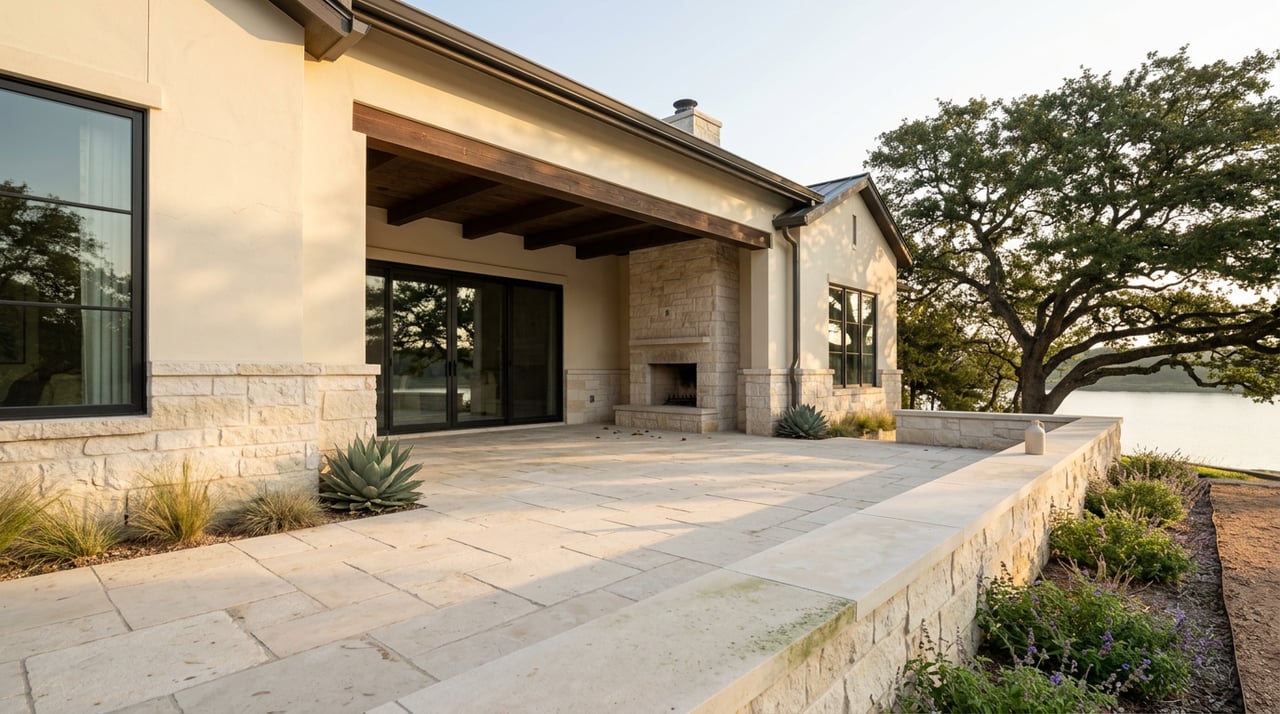
Walk the docks at Rough Hollow Yacht Club and Marina this week and Lake Travis looks like it never left. Coves that sat exposed for years are open water again. Boat ramps that spent seasons stranded above a shrinking shoreline are back in use. The sandbar locals nicknamed "Sometimes Island" is submerged, which is the whole point of its name. If you are touring waterfront listings in Rough Hollow right now, you are seeing the lake at its best in seven years.
That is exactly the problem.
Lake Travis crossed full pool, 681 feet above mean sea level, overnight on July 17, 2026. It was the first time the lake had reached that mark since 2019. The rise pushed the reservoir into flood pool, and LCRA opened floodgates at Mansfield Dam to manage the overflow, along with gates at Wirtz, Starcke, and Tom Miller dams downstream. As of today, the lake sits at roughly 98.2 percent of its conservation pool, according to public reservoir tracking at Water Data for Texas. That is a remarkable number to see on a Highland Lakes reservoir that spent most of the last decade well below it.
It is also a poor moment to judge a dock.
A Lake Built to Not Stay Full
Lake Travis is not a natural lake. It is a flood control and water supply reservoir managed by LCRA, and being below full pool most of the time is not a malfunction. It is the design. Across a calendar year, the lake can fluctuate somewhere between roughly 665 and 685 feet, rising with rain and falling as water is released downstream for municipal use, hydropower, and flood management. During drought, the swings get much larger. The 2011 Texas drought, the most severe single year drought on record in the state, pulled the lake down to 619.57 feet by that fall, more than 61 feet below full.
That range matters more than the view on any given tour day, because a dock permitted and built to work at 681 feet does not automatically work at 665 feet, and it may not work at all if the lake ever revisits something closer to 2011 conditions. A buyer who falls for this week's full cove is pricing the lake at its ceiling. The honest question is what the same lot looks like somewhere in the middle of its range, and what it looked like at the bottom.
| Lake elevation | What it represents | What a buyer would see |
|---|---|---|
| 681 ft (full pool) | Conservation pool capacity | Coves full, most ramps usable, current condition as of mid-July 2026 |
| 665-685 ft | Approximate annual fluctuation range | Typical seasonal swing, some ramps and coves periodically shallow |
| 619.57 ft | 2011 drought low | Sandbars exposed, many docks unusable, ramps stranded |
The Question That Actually Protects You
None of this means Rough Hollow waterfront is a bad bet. Homes with genuine main body or deep cove access remain the scarcest product on this stretch of the lake regardless of what the gauge reads on closing day. It means the due diligence has to happen at the lot level, not the marketing level.
LCRA does not require a formal permit or registration for a residential dock of 1,500 square feet or less, though it still must meet LCRA's safety standards for flotation, lighting, anchoring, and maximum distance from shore. Anything larger, which typically means commercial marinas and larger community facilities, needs a formal permit under the Highland Lakes Marina Ordinance, last updated in 2023.
A dock is not a feature of a house. It is a feature of one specific point on one specific shoreline, tested across the lake's full range rather than its best week.
Before you go under contract on anything with water access in Rough Hollow, ask for:
- The dock's permit number and any LCRA approval letters, and written confirmation those approvals transfer to a new owner at closing.
- The dock's engineered elevation range, meaning whether it was designed to function near full pool only or across a wider band closer to the lake's historical low.
- Any LCRA shoreline compliance notices tied to the property.
- Confirmation of where the submerged land under the dock is owned, since LCRA does not resolve private property boundary disputes between neighbors.
Local jurisdiction and HOA rules can also be more restrictive than LCRA's baseline, so a dock that clears LCRA review can still run into a tighter city or community standard. It is worth working through this list with someone who tours these lots regularly rather than assuming the listing photos tell the whole story.
What This Means for Pricing Right Now
The full lake is arriving during a market that is already sending mixed signals depending on which slice of Rough Hollow you look at. Over the trailing twelve months through June 2026, 85 homes closed in the community with a median price of $880,000 and an average near $1,085,245, selling at about 96.7 percent of list price with a median 59 days on market. Active listings this summer run from $649,000 up to $6,850,000, with a median ask above $1.3 million, a spread wide enough that the word "Rough Hollow" alone tells you almost nothing about what you are actually buying.
At the same time, broader tracking in August 2026 shows the community's median list price flat year over year at $899,000 and price per square foot down about 2 percent from August 2025, with homes sitting a median of 130 days before selling. That is a meaningfully slower pace than the 59-day figure from closed sales, and the gap is not a contradiction so much as a symptom. Entry-tier and hillside homes without direct water access are moving at a different speed than true waterfront lots with functioning docks, and lumping them into one median flattens exactly the distinction this article is about. A dock lot with documented LCRA approval and a design built for the lake's real range is not competing in the same pool as a home with a seasonal glimpse of water from a hillside three streets back.
If you are shopping the waterfront tier specifically, the full lake is a good moment to see the amenities at their best. The Rough Hollow Yacht Club and Marina runs more than 294 boat and jet ski slips with a dual car tram down to the docks, a fuel dock with pump out service, and a Ship Store for essentials, plus Freedom Boat Club on site if you want lake days without owning a vessel. Above the marina sits a resort style infinity pool, the SHAPE fitness center, and Canyon Grille for dinner with a view. The separate Highland Village amenity hub adds a lazy river, splash pad, and an adults only pool with a swim up bar, with a full time Rough Life Director running events year round. Rough Hollow sits about 18 miles from downtown Austin via RR 620 to TX-71, a drive that runs 30 to 50 minutes depending on traffic, and the community falls within Lake Travis ISD with Rough Hollow Elementary inside its boundaries.
None of that changes with the lake level. The dock does.
A Few Questions Worth Asking Directly
Does every dock in Rough Hollow need a permit from LCRA? No. Docks of 1,500 square feet or less do not require a formal permit or fee, though they must still meet LCRA's safety standards. Larger private marinas and community facilities do need a permit under the Highland Lakes Marina Ordinance.
Will a full lake this year affect my mortgage or insurance underwriting? Lenders and insurers on Highland Lakes properties routinely factor in flood risk and lake level variability as part of underwriting, independent of what the lake happens to be doing the week you close. A full lake today does not remove that consideration from the file.
What happens to a dock if the lake drops again? What changes is usability. A dock engineered only for near full pool conditions may sit in mud or shallow water during a normal seasonal low, which is why confirming the engineered range before you buy matters more than the photo taken this month.
A full lake is a fine time to fall in love with Rough Hollow. It is a poor time to assume the view is guaranteed. If you are weighing a waterfront purchase here or comparing it against other communities on the lake, Jeff Joseph has spent enough time on these docks to know which questions the listing photos will not answer. Reach out and let's talk through the specific lot before you write an offer.
This article is general information, not legal, tax or financial advice. Consult a qualified professional about your situation.