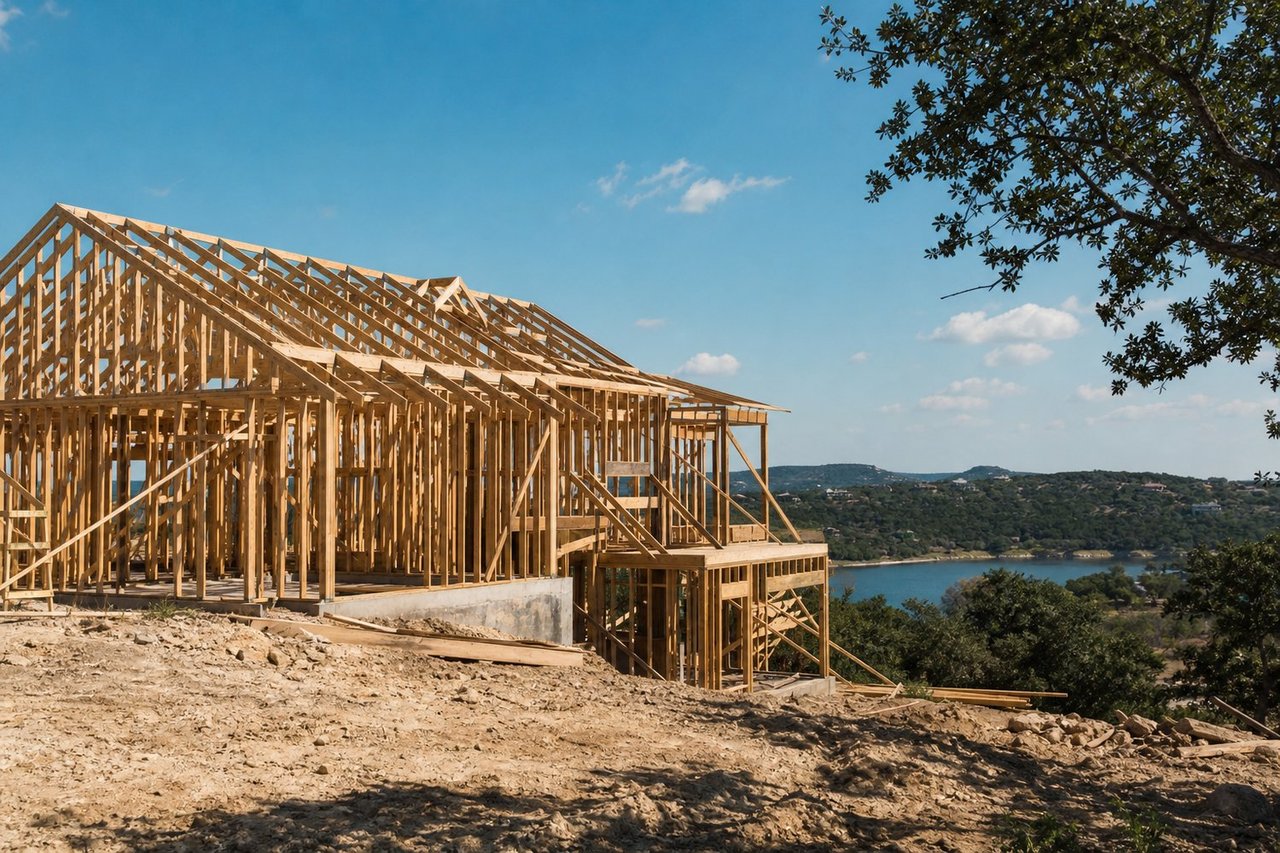
Before you tour a model, settle three questions: who governs the lot, how sewer and utilities are served, and what the builder's track record looks like in finished neighborhoods. Then confirm which nearby roads are funded and which are only proposed. Those answers shape your price, commute, and monthly cost more than the floor plan does.
What should you expect from new construction in Williamson County?
Expect a fast-growing county where the details that matter most, such as which city governs the lot, whether it has city sewer or septic, and which roads are funded versus only proposed, are not on the model-home flyer. New construction in Williamson County rewards buyers who vet the builder and the location before they fall for the floor plan. Jeff Joseph walks buyers through that vetting before a contract is signed.
Key Takeaways
- Williamson County added 23,814 residents between 2024 and 2025, ranking fifth among Texas counties for population growth, which is why new subdivisions keep opening.
- In recent local market data for Crystal Falls, single-family homes sold July–September 2026 closed at a median of $734,878, at 97.0% of list price on average.
- In that same Crystal Falls window, 83% of single-family sales closed below list price and 47% of listings had a price cut, so negotiating room exists.
- The city or county permitting authority depends on whether the lot sits inside a municipality or in an unincorporated area, so confirm jurisdiction by address.
- A road or corridor with funding is not the same as one that is built, so ask for the schedule before you count on a shorter commute.
How do you vet a builder for new construction in Williamson County?
Start with the builder's finished work, not the model home. Visit completed communities, talk to owners who have lived there a while, and ask how the builder handled problems after closing.
What should you check about a builder's reputation?
Check the builder's completed communities, any unresolved homeowner complaints, the warranty process, publicly available litigation history, and whether past homes were delivered on the promised timeline. Then ask the sales office who maintains the roads, amenities, landscaping, and common areas once the builder leaves: an HOA or another entity. Ask for the recorded development documents and read them.
Jeff's background in the Austin Police Department Bomb Squad shapes how he approaches this. He reads the paperwork, verifies each claim, and does not take a sales pitch at face value.
Production builder or custom builder?
A production builder sells set plans in a larger subdivision with predictable pricing and a fixed menu of options. A custom builder works on your lot to your design, which brings more control and more decisions. Neither is better by default. The right choice depends on how much you want to customize, your tolerance for decisions, and your timeline.
What should you know about the contract and timeline?
Separate the builder's estimated completion date from your contractual rights if that date slips. Then line up your lender's rate-lock timing against it. A home can look structurally finished and still lack final approvals, permanent utility connections, appliance delivery, landscaping, or subdivision amenities. If you are using VA or other specialty financing, tell your lender about the build schedule early and verify what they require.
Builder contracts are written by the builder, so read every page before you commit. Jeff's breakdown of what Austin buyers should know before signing a new construction contract covers the clauses worth slowing down on.
What do MUD and PID taxes do to your monthly number?
Many newer subdivisions carry MUD or PID assessments on top of regular property taxes, and they change what you pay each month. Jeff gives buyers that straight talk upfront, because finding out after closing is the worst time. Ask the builder which taxing entities apply to the lot, then check them against the full picture in new construction taxes and costs to check.
Which part of Williamson County fits your commute and lot?
It depends on your commute direction, the lot type, and the city that governs it. The county is large, and what is true in Leander can be wrong in Hutto.
Who regulates the home you are buying?
Williamson County's unincorporated areas use county-level construction and fire-review processes, while incorporated cities such as Round Rock, Georgetown, Leander, Cedar Park, Hutto, Taylor, and Liberty Hill may impose their own development and permitting requirements. The county's construction permits page lays out that split. For any address, confirm the governing municipality, utility providers, school district, tax entities, and who owns the roads before you commit.
City sewer or septic?
Homes outside centralized sewer service may need an on-site sewage facility. The county routes those applications through MyGovernment Online, per its builder guidance. On a semi-rural lot, confirm in writing whether the property uses municipal sewer or private septic, then ask about soil conditions, permitted capacity, and who handles maintenance.
How do the different corners of the county compare?
- Leander and Northwest Austin: Communities like Crystal Falls and Travisso offer a mix of new builds and resale. Jeff's comparison of new construction vs resale in Travisso shows how that decision plays out.
- Georgetown and the Round Rock border: This area is close to major north Austin employment and retail corridors. A November 2026 local development report from Community Impact identified a proposed 900-home community near the Georgetown and Round Rock border. A proposal is not a permit or a foundation, so verify its status with the city and developer.
- Liberty Hill: Larger, expanding subdivisions are common. Verify road capacity, utility providers, water pressure, wastewater service, and the likely timing of nearby commercial development, rather than trusting the builder's community map.
- Hutto and Taylor: Transportation is changing quickly. The county reported that East WilCo Highway Segment 2 opened in October 2026, connecting SH 130 in Pflugerville to Chandler Road in Taylor. Test your actual drive, in your actual direction, at your actual hour.
Which road projects are real?
The county's 2026 fact sheet treats growth management as a central planning issue. For a buyer, that means checking whether nearby roads, schools, utilities, and shopping are operating or still planned. In October 2026, the county announced $7 million in federal funding for Corridor A2, a planned connection from FM 3349 to SH 95 south of Taylor. Funding is progress, but it does not mean every segment is built. Ask for the schedule and expected construction impacts. For the Leander side, see how growth affects future homeowners in Leander and Cedar Park.
What do recent numbers say about negotiating with a builder?
They suggest buyers have some room to negotiate, though one neighborhood is not the whole county. Demand is real: Williamson County recorded 4,956 permitted private housing structures in 2025, according to U.S. Census Bureau data via the St. Louis Fed. That is annual, historical context, not a 2026 market reading. Jeff's look at what the new construction boom means for buyers and sellers goes deeper on that.
For a current local read, here is recent local market data for Crystal Falls in Leander. These are all single-family sales, so they show the market a new build competes against, not builder-only pricing.
Measure | Crystal Falls, single-family homes sold July–September 2026 | What it tells you |
|---|---|---|
Median sale price | $734,878 (a year earlier: $737,500) | Prices are essentially flat year over year |
Median price per square foot | $237 | A benchmark for comparing a builder's price per foot |
Homes sold | 37 (a year earlier: 38) | Steady activity, not a surge or a stall |
Average sale price vs. list price | 97.0% | Sellers are accepting less than asking on average |
Sold below list price | 83% (6% sold above) | Negotiation is the norm |
Months of supply | 4.4 | Unchanged from a year earlier |
Under contract within two weeks of listing | 19% | Most homes take longer than two weeks to go under contract |
Listings with a price cut | 47% (average cut 3.2%) | Many sellers adjust after launch |
Median asking price, newly listed | $767,180 | Asking prices run above what homes actually sell for |
An individual home's value still depends on condition, street, build year, and timing, and a builder's pricing follows its own logic. Use these numbers as leverage when you compare a new build to the resale homes nearby. Your specific number depends on the lot, the incentives, and the contract terms. That is where a side-by-side comparison with Jeff earns its keep.
What should you check before closing on a new build?
Check the work, the approvals, and the paperwork before you accept the home. A new home can still have construction defects or unfinished items, so do not assume brand new means finished.
- Hire an independent inspector. Arrange an inspection during or near the end of construction, not just the builder's own walk-through.
- Review the punch list. Every item should be written down with a completion plan before you close.
- Confirm approvals and utilities. Make sure the required municipal approvals are complete and permanent utilities are connected.
- Do a final walkthrough. Compare the home against your contract, selections, and punch list before you accept it.
- Understand the warranty process. Know who to call, how requests are submitted, and what is covered.
Your title company handles the closing itself. Texas has no real estate transfer tax, so the costs to plan for are the ones tied to your loan, taxes, and the contract.
Want to see what past clients say? Read Jeff's reviews on Google, Zillow, and Realtor.com.
FAQ
Which Williamson County cities are best for new construction near Austin?
It depends on your commute, lot type, and budget. Leander, Georgetown, Round Rock, Liberty Hill, Hutto, and Taylor all have active development, and each has different road access and jurisdiction rules. Identify your drive direction first, then compare communities by the specific address.
How do I check a builder's reputation before buying?
Tour completed communities and talk to current owners. Review unresolved complaints, warranty history, publicly available litigation, and whether past homes were delivered on time. Ask who maintains the roads and common areas, and read the recorded development documents.
How can I tell whether a community has city sewer or septic?
Ask the builder and the city for written confirmation. Homes outside centralized sewer service may need an on-site sewage facility, which Williamson County routes through MyGovernment Online. If a lot is septic, ask about soil conditions, permitted capacity, and maintenance responsibility before you contract.
What should I inspect in a new-construction home before closing?
Inspect everything, because new homes can still have defects or incomplete work. Use an independent inspector, review the punch list, confirm approvals and utilities are complete, and do a final walkthrough before accepting the home.
What infrastructure is planned near new subdivisions?
It varies by subdivision. East WilCo Highway Segment 2 opened in October 2026, and Corridor A2 near Taylor received $7 million in federal funding that same month. Always separate funded or active projects from proposed ones, and get the schedule for the road nearest your lot.
Ready to compare builders and locations?
New construction in Williamson County can be a smart purchase when you know who governs the lot, how it is served, and what the builder has actually delivered. Jeff Joseph brings Austin roots, new construction experience, and a habit of verifying every claim before a client signs.
Search Austin & Leander Homes →
Starting from scratch? Jeff's step-by-step guide to buying a home in Leander covers the full process.
Equal Housing Opportunity. Jeff Joseph, Texas Real Estate Sales Agent, ERA Experts. Regulated by the Texas Real Estate Commission. This article is general information, not legal, tax, or financial advice. Confirm your own numbers with your title company, tax advisor, or lender.